Your cart is currently empty.
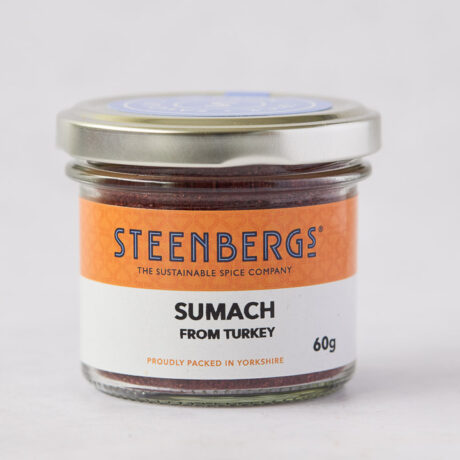
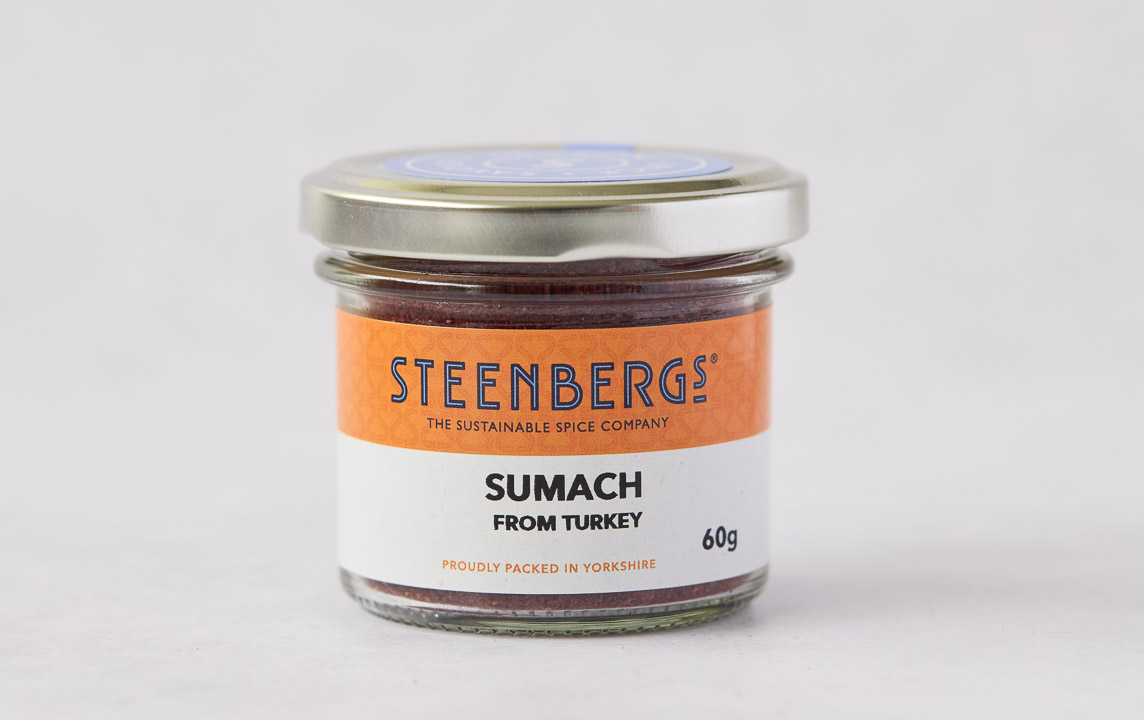
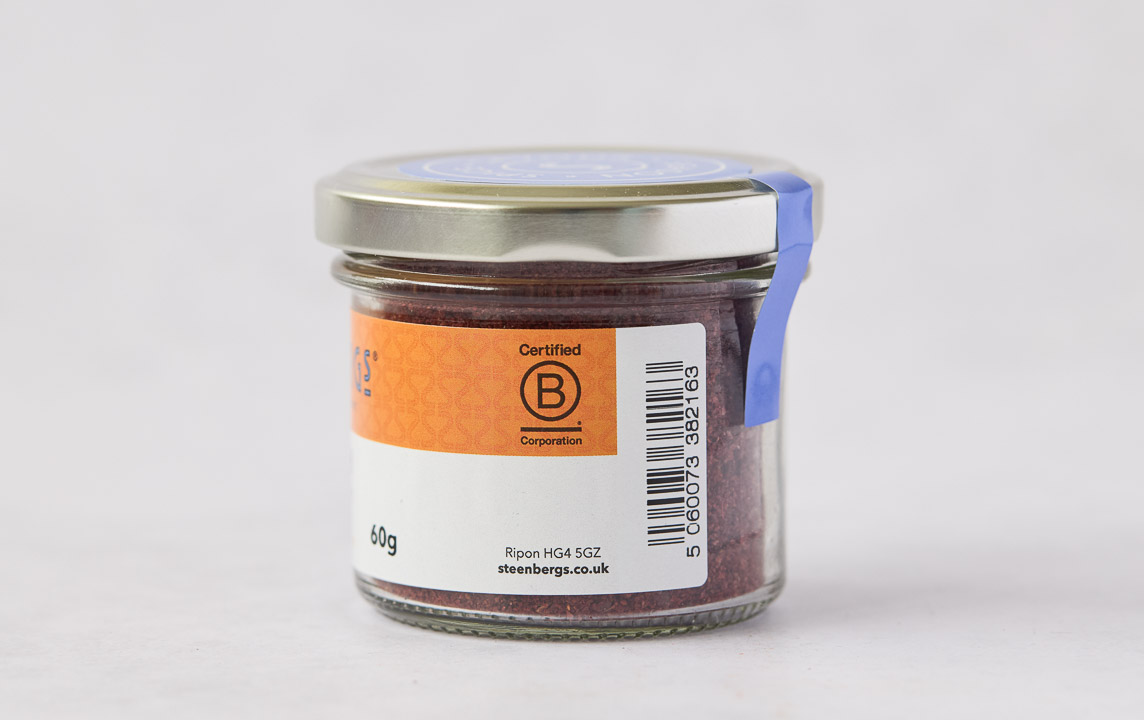
Steenbergs Sumac
Standard Jar 60g
£3.20 £5.00/100g
12 in stock
Product Description
Sumac is a key ingredient in Middle-Eastern cooking, especially Lebanese. It is a deep burgundy coarse powder. It tastes sour, sharp and fruity.
Steenbergs sources premium sumac from Turkey that we pack down in small batches to ensure a fresh, lively and vibrant flavour. It’s colour is deep burgundy, and comes coarsely ground and slightly moist.
Sumac has a fruity and slightly lemony acid taste that complements onions really well. Before lemons, sumac was the souring agent of choice around the Mediterranean – less sour than both lemons or tamarind, it still features in many Middle Eastern dishes.
Used on its own, sumac has the tartness of lemon juice, alternatively mix sumach with thyme and sesame seeds and make zahtar.
Axel’s Tasting Notes: Tangy; salty, lemon-like, then a fruity tanginess, with no sharpness.
Food Pairing: Aubergines, chickpeas, youghurt, chicken. Use in Middle Eastern cuisine, sprinkled over kebabs, over flatbreads or over tomatoes, or mix with a bit of salt, thyme and oregano and rub over chicken or lamb.
More about Sumac
Sumac comes from a small tree, Rhus coriaria, which grows in poor, rocky soil similar to that enjoyed by olive trees.
Sumach trees grow to 3 metres high. They have a quite dense, deep green, frondy foliage. The tree bears small bunches of little white flowers before the fruit cluster develops.
Sumac berries are tightly bunched, conical clusters of pinkish red to crimson allspice sized berries. The sumac clusters grow 8 – 10 cm. When ripe, the berries are crimson and have a thin outer skin around a hard tick-shaped seed.
Sumac powder is made from the berries, mixed with some salt to give a deep burgundy colour, coarse textured and moist.
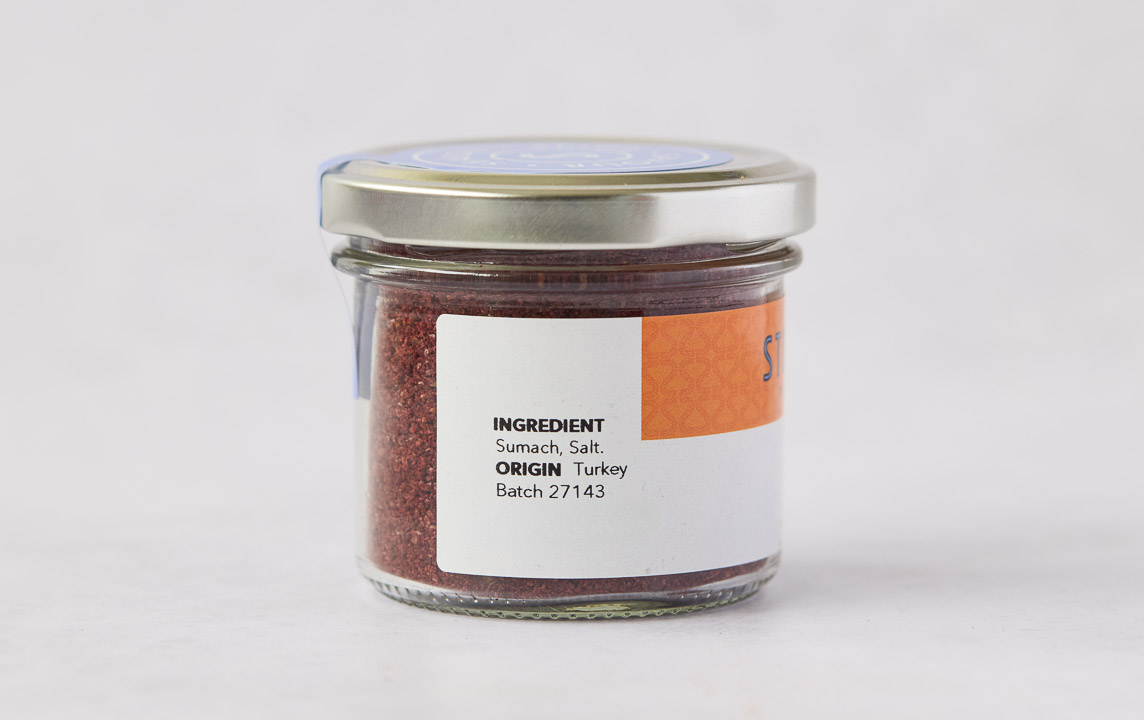
Ingredients
Sumac, Salt
Allergens marked in bold.
Nutritional Information
| Nutrient | Per 100g | Per Serving (2.5g) |
|---|---|---|
| Energy | 376.0 kcal / 1583.0 kJ | 9.4 kcal / 39.6 kJ |
| Fat | 13.0 g | 0.3 g |
| (of which saturates) | 2.9 g | 0.07 g |
| Carbohydrates | 61.5 g | 1.5 g |
| (of which sugars) | 0.5 g | 0.01 g |
| Protein | 3.3 g | 0.08 g |
| Salt | 5.7 g | 0.1 g |
| Nutrient | Per 100g |
|---|---|
| Energy | 376.0 kcal / 1583.0 kJ |
| Fat | 13.0 g |
| (of which saturates) | 2.9 g |
| Carbohydrates | 61.5 g |
| (of which sugars) | 0.5 g |
| Protein | 3.3 g |
| Salt | 5.7 g |
| Nutrient | Per Serving (2.5g) |
|---|---|
| Energy | 9.4 kcal / 39.6 kJ |
| Fat | 0.3 g |
| (of which saturates) | 0.07 g |
| Carbohydrates | 1.5 g |
| (of which sugars) | 0.01 g |
| Protein | 0.08 g |
| Salt | 0.1 g |
Storage
Store in a cool, dark place.
Recycling
Glass: Reuse, Widely Recycled. Metal Lid: Reuse, Widely Recycled. To remove the labels: the best way is to apply heat with a hairdryer and then they peel off.
You may also like…
-
 Steenbergs
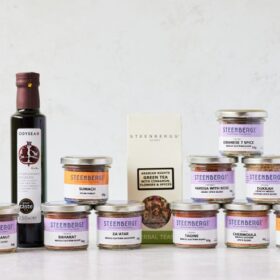
Steenbergs Organic Tastes of Arabia Jute Bag
£47.00 Add to bag This product can be to the cart here or from the product itself. -
 Steenbergs
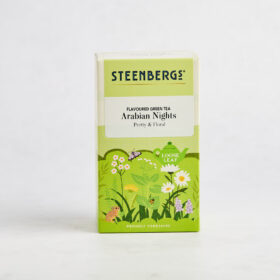
Steenbergs Arabian Nights Tea
Carton 55g£4.99 Add to bag This product can be to the cart here or from the product itself. -
 Steenbergs
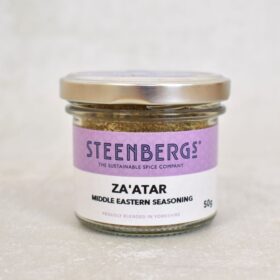
Steenbergs Za’atar
Standard Jar 50g£4.00 Add to bag This product can be to the cart here or from the product itself.