Your cart is currently empty.
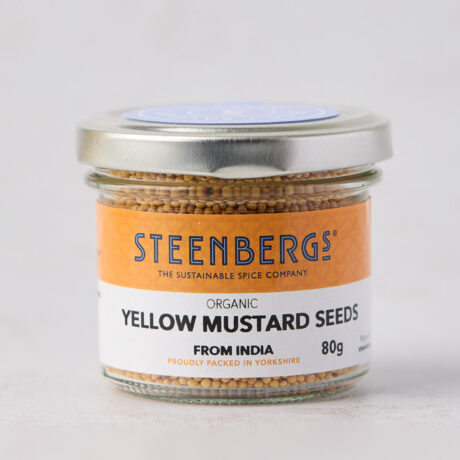
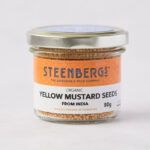
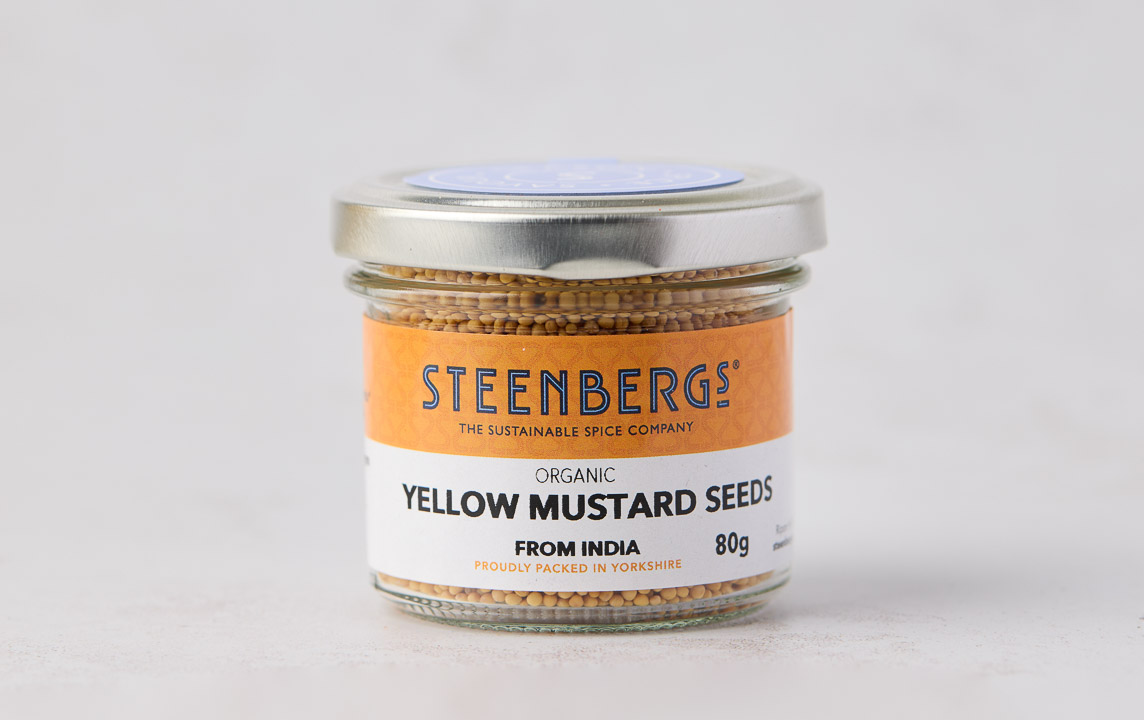
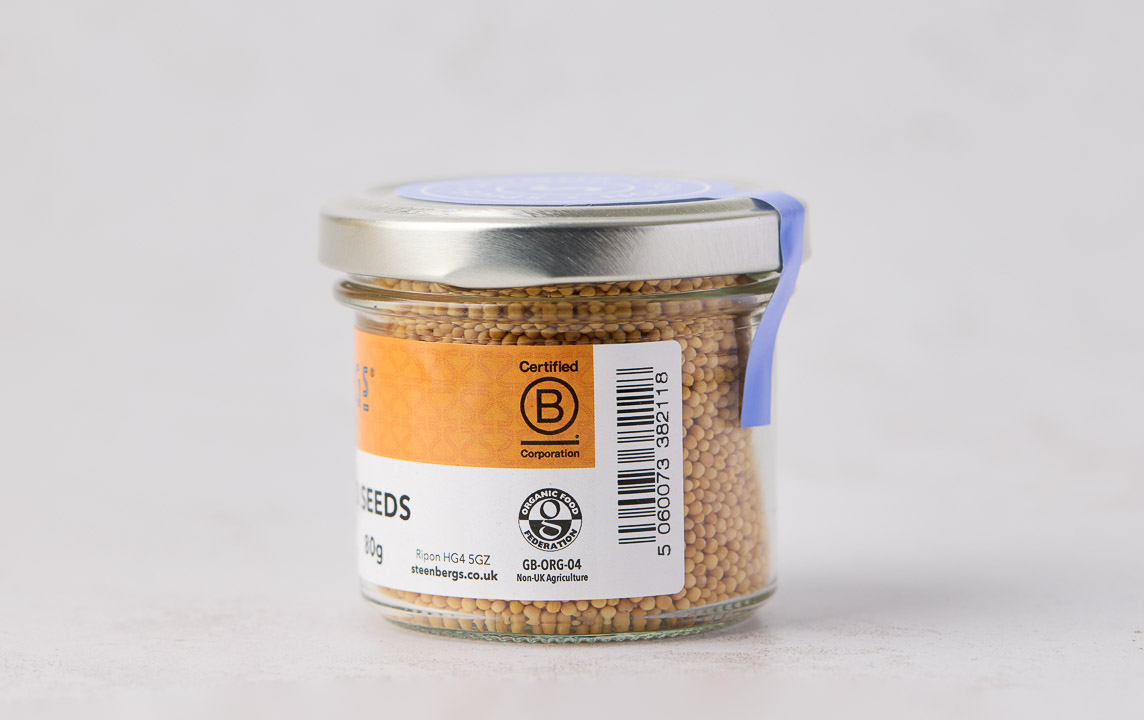
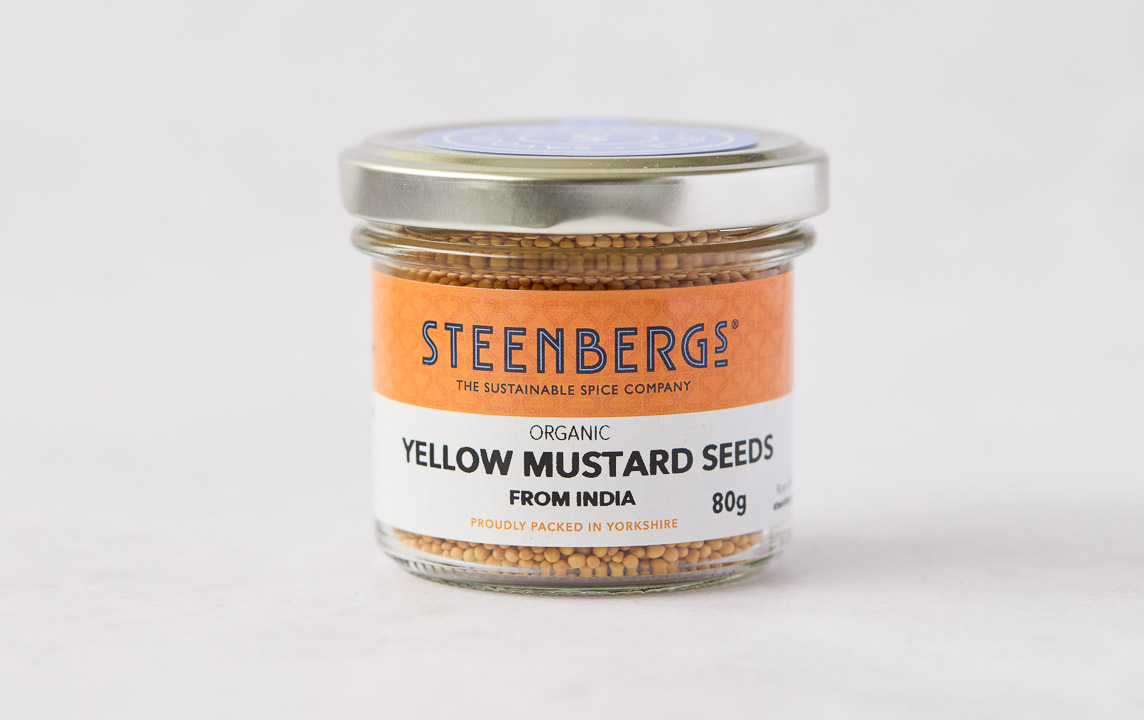
Steenbergs Organic Yellow Mustard Seeds
Product Description
Steenbergs Organic Yellow Mustard Seeds are the classic mustard spice used in Britain. They are not as hot as brown mustard, having a less nutty pungency.
It is the yellow mustard that’s used in English mustards, pickling, preserving, marinading and sausage making. Brown or black mustard seeds are used more in Indian cooking.
Yellow Mustard Seeds are small, round, dull yellow seeds. They have no distinctive aroma but when chewed or if cut with water they develop are sharp, hot bite to them which gets to the back of your nose.
Axel’s Tasting Notes: Yellow Mustard Seeds are Hot: little aroma till they become wet when they have a sharp heat.
Food Pairing: Pickling, mustard making or crush and add to white sauces for some heat.
More about Mustard
Yellow mustard, Brassica alba, is the smallest growing of the mustard plants. Yellow mustard plants grow to about 1 m high and have a hairy appearance.
The leaves of yellow mustard are pale-green, soft and lobed, and the flowers are bright-yellow and quite large. The yellow mustard seed pods have a bird’s beak shape and grow to 2.5 – 5cm long and have six yellow seeds.
The yellow mustard seeds are a small round seed of 2mm in diameter and are milder than brown or black mustard seeds.
The pods are picked when they are fully developed but not yet ripe as they burst open easily. After cutting, the mustard hay is stacked in sheaves to dry before being threshed to remove the seeds.
Yellow mustard is mildly hot in pungency, because the enzyme myrosinase is released when chewed or broken and hydrolyses the sinalbin and produces free p-hydroxybenzyl isothiocyanate, a pungent substance. This is a similar process to the heat that arises in black mustard, watercress and horseradish.
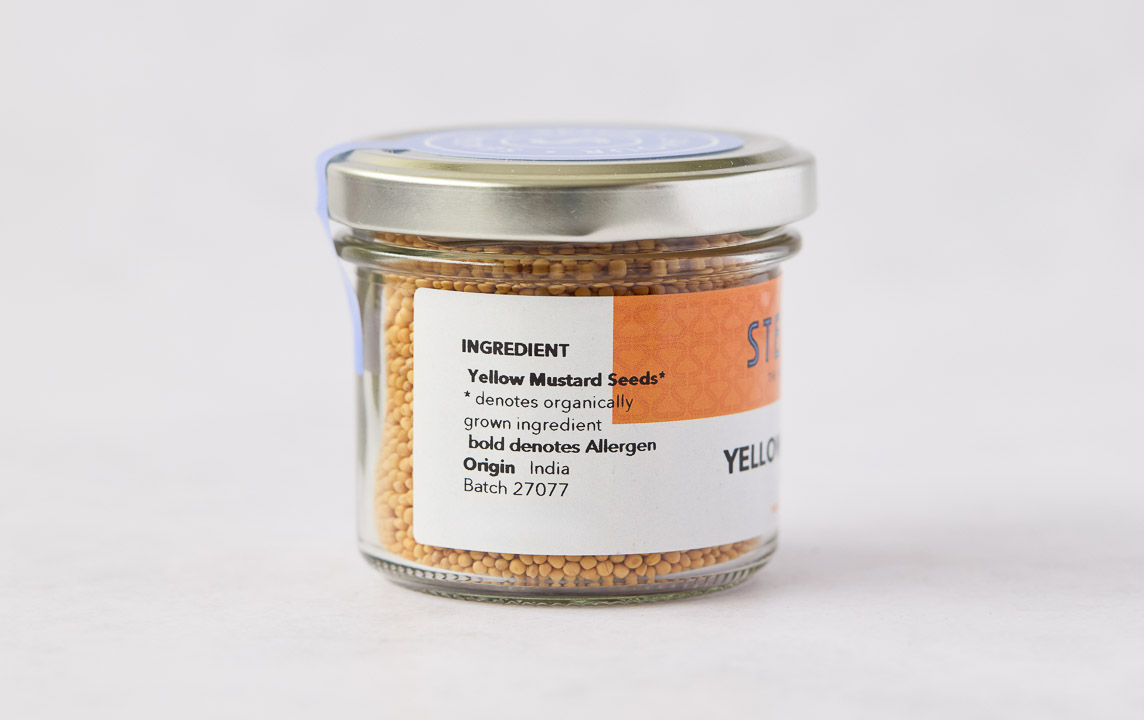
Ingredients
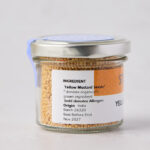
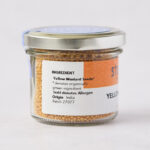
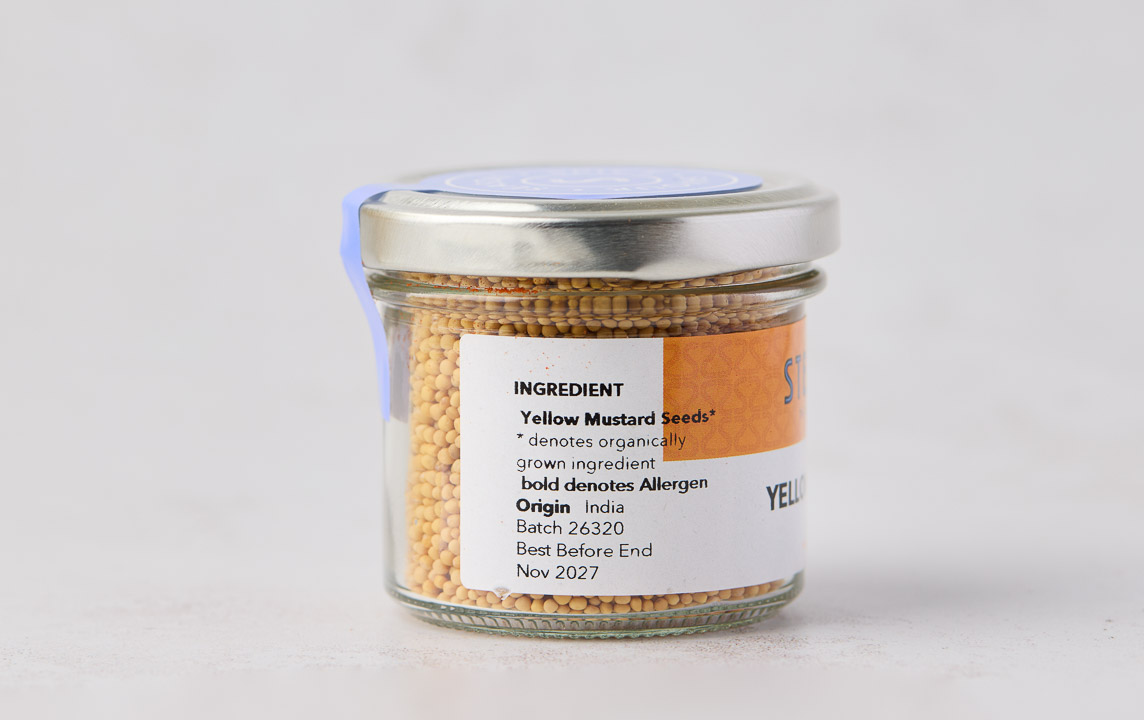
Yellow Mustard Seed*
* Organic. Allergens marked in bold.
Nutritional Information
| Nutrient | Per 100g | Per Serving (2.5g) |
|---|---|---|
| Energy | 393.0 kcal / 1662.0 kJ | 9.8 kcal / 41.6 kJ |
| Fat | 5.0 g | 0.1 g |
| (of which saturates) | 0.2 g | 0.01 g |
| Carbohydrates | 66.2 g | 1.7 g |
| (of which sugars) | 3.3 g | 0.08 g |
| Protein | 20.7 g | 0.5 g |
| Salt | 0.0 g | 0.0 g |
| Nutrient | Per 100g |
|---|---|
| Energy | 393.0 kcal / 1662.0 kJ |
| Fat | 5.0 g |
| (of which saturates) | 0.2 g |
| Carbohydrates | 66.2 g |
| (of which sugars) | 3.3 g |
| Protein | 20.7 g |
| Salt | 0.0 g |
| Nutrient | Per Serving (2.5g) |
|---|---|
| Energy | 9.8 kcal / 41.6 kJ |
| Fat | 0.1 g |
| (of which saturates) | 0.01 g |
| Carbohydrates | 1.7 g |
| (of which sugars) | 0.08 g |
| Protein | 0.5 g |
| Salt | 0.0 g |
Storage
Store in a cool, dark place.
Recycling
Glass: Reuse, Widely Recycled. Metal Lid: Reuse, Widely Recycled. To remove the labels: the best way is to apply heat with a hairdryer and then they peel off. Bag: Recycle as paper.