Your cart is currently empty.
A Proper British Curry Night: Homemade Chicken Tikka Masala
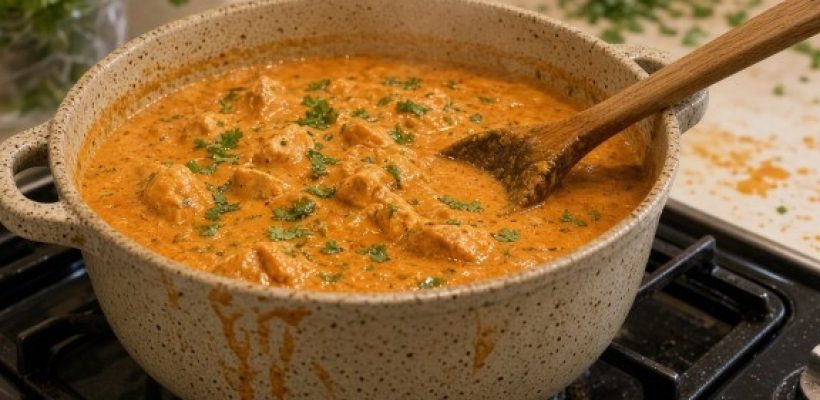

By Vagner Carvalho | Serves 4 | Prep 20 min, plus marinating | Cook 45 min
Ask almost anyone in Britain to name the nation’s favourite dish and there is a very good chance they will say chicken tikka masala. Tender pieces of spiced, charred chicken in a creamy, gently spiced tomato sauce, scooped up with warm naan bread or spooned over fluffy basmati rice: it is the centrepiece of the Friday night curry, the takeaway order that never changes and a dish that many families now cook at home every week.
Its popularity is no accident. Tikka masala manages to be rich and comforting without being fiercely hot, and its spices are warm and fragrant rather than overpowering. That makes it the perfect introduction to curry for children and cautious eaters, while still being satisfying enough for those who love big flavours. And while the takeaway version is a treat, making it yourself is surprisingly simple. With a well-stocked spice drawer, you can have a restaurant-quality curry on the table in about an hour.
The secret, as with all good curries, lies in the spices. This recipe uses four key ones: garam masala, cumin, turmeric and paprika. Each plays its own part, and using good, fresh, organic spices, such as those from Steenbergs, makes a remarkable difference to the depth and aroma of the finished dish. Below I explain what each spice does, then walk you through a recipe that is easy enough for a weeknight and special enough for a curry night with friends.
A Very British Curry
Chicken tikka masala has a fascinating story. Chicken tikka, small pieces of marinated chicken cooked in a tandoor oven, has long been a favourite in the Indian subcontinent. The masala sauce, however, is generally believed to have been created in Britain, most famously attributed to a restaurant in Glasgow in the 1970s, where a chef is said to have added a quick tomato and cream sauce for a customer who found his chicken tikka too dry. Whether or not that story is entirely true, the dish took off in curry houses across the country and became a true British-Asian classic.
Today it is a symbol of how much the food of South Asia has shaped modern British cooking. Curry houses are found on high streets from Cornwall to the Highlands, and the curry night has become a weekly ritual in countless homes. Cooking your own tikka masala is a lovely way to take part in that tradition, and it allows you to control the heat, the richness and the quality of the ingredients.
About the Spices
Garam masala
Garam masala means “warm spice mix”, and it is the aromatic heart of this dish. Blends vary from region to region and family to family, but most include cumin, coriander, cardamom, cinnamon, cloves and black pepper. It is used in two ways in this recipe: in the marinade, where it seasons the chicken, and at the very end of cooking, where a final sprinkle releases a fresh burst of fragrance. A good organic garam masala, like Steenbergs, gives a balanced, rounded warmth without any harshness.
Cumin
Cumin brings an earthy, slightly smoky depth that is essential to so many curries. Ground cumin is used here, but if you have whole seeds, you can toast them in a dry pan for a minute until fragrant and grind them yourself for an even more intense flavour.
Turmeric
Turmeric gives the sauce its warm golden colour and a gentle, earthy bitterness that balances the sweetness of the tomatoes and cream. It is a powerful spice, so a little goes a long way. It is also one that benefits greatly from being cooked briefly in oil, which mellows its raw edge.
Paprika
Paprika gives the sauce its gorgeous deep orange-red colour and a mild, sweet pepper flavour. Many recipes use Kashmiri chilli powder for colour, but a good sweet paprika does the same job beautifully without adding too much heat. For a subtle smoky note, try using half smoked paprika.
Ingredients
For the chicken tikka
- 700 g boneless, skinless chicken thighs, cut into bite-sized pieces
- 150 g natural yoghurt (full-fat is best)
- Juice of ½ lemon
- 3 garlic cloves, finely grated
- A thumb-sized piece of fresh ginger, finely grated
- 2 tsp Steenbergs organic garam masala
- 1 tsp Steenbergs organic ground cumin
- ½ tsp Steenbergs organic ground turmeric
- 2 tsp Steenbergs organic paprika
- 1 tsp fine sea salt
- 1 tbsp vegetable oil
For the masala sauce
- 2 tbsp vegetable oil or ghee
- 25 g unsalted butter
- 2 medium onions, finely chopped
- 4 garlic cloves, finely grated
- A thumb-sized piece of fresh ginger, finely grated
- 1 green chilli, finely chopped (optional)
- 2 tsp Steenbergs organic ground cumin
- 1 tsp Steenbergs organic ground turmeric
- 2 tsp Steenbergs organic paprika
- 1 tsp ground coriander
- 2 tbsp tomato purée
- 1 x 400 g tin chopped tomatoes
- 150 ml water or chicken stock
- 1 tsp sugar
- 150 ml double cream
- 2 tsp Steenbergs organic garam masala, to finish
- 1 tsp dried fenugreek leaves (kasuri methi), optional
- A small bunch of fresh coriander, chopped
- Salt, to taste
From your kitchen
- A large mixing bowl
- A grill pan, griddle or heavy frying pan
- A large, deep pan or casserole with a lid
- A stick blender or ordinary blender
- A wooden spoon, a sharp knife and a chopping board
- A fine grater for the garlic and ginger
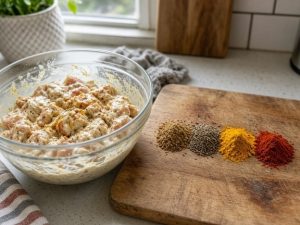
The chicken marinating in yoghurt, with garam masala, cumin, turmeric and paprika.
Method
- Marinate the chicken. In the mixing bowl, combine the yoghurt, lemon juice, garlic, ginger, garam masala, cumin, turmeric, paprika, salt and oil. Add the chicken pieces and stir until they are well coated. Cover and refrigerate for at least 1 hour, or ideally overnight. The yoghurt and lemon tenderise the chicken, while the spices penetrate the meat.
- Cook the chicken tikka. Heat the grill pan or a heavy frying pan over a high heat until very hot. Shake off any excess marinade and cook the chicken in batches for 3 to 4 minutes on each side, until nicely charred at the edges. It does not need to be cooked through at this stage, as it will finish in the sauce. Alternatively, thread the pieces onto skewers and cook under a hot grill. Set aside.
- Soften the onions. In the large pan, heat the oil and butter over a medium heat. Add the onions with a pinch of salt and cook slowly, stirring often, for 12 to 15 minutes, until soft and golden. Take your time here, as well-cooked onions give the sauce its sweetness and body.
- Add the aromatics. Stir in the garlic, ginger and chilli, if using, and cook for 1 to 2 minutes until fragrant.
- Bloom the spices. Add the cumin, turmeric, paprika and ground coriander. Cook for about 1 minute, stirring constantly, so the spices fry gently in the oil and release their aroma. If the pan looks dry, add a splash of water to prevent the spices from catching.
- Build the sauce. Stir in the tomato purée and cook for a minute, then add the chopped tomatoes, water or stock and sugar. Bring to a simmer and cook gently for 15 minutes, stirring occasionally, until the sauce has thickened and the oil begins to separate at the edges.
- Blend for smoothness. For a silky restaurant-style sauce, blend it with a stick blender until smooth. If you prefer a more rustic texture, you can leave it as it is.
- Finish the curry. Return the sauce to a gentle heat and add the chicken and any juices. Simmer for 8 to 10 minutes until the chicken is cooked through. Stir in the cream, the finishing garam masala and the fenugreek leaves, crumbled between your fingers. Heat through without boiling, then taste and adjust the salt.
- Scatter with fresh coriander and serve with basmati rice, naan and your favourite pickles.
Friday curry night at home: tikka masala with basmati rice and warm naan.
Tips for a Takeaway-Style Tikka Masala
- Use chicken thighs. They stay juicy and tender, even after a long simmer. Breast meat works too but can become dry.
- Marinate overnight if you can. The longer the chicken sits in the spiced yoghurt, the more tender and flavourful it becomes.
- Get some char. Those blackened edges give the curry the smoky taste of the tandoor. A very hot pan is the key.
- Cook the onions slowly. Rushing them leaves a raw, sharp flavour. Golden, sweet onions are the foundation of a great sauce.
- Finish with garam masala. Adding a little at the end gives a fresh, aromatic lift that is lost if all the spices are added at the beginning.
- Keep your spices fresh. Ground spices lose their aroma over time. Store them in airtight jars away from heat and light, and replace them regularly.
Making It Your Own
Tikka masala is a forgiving dish, and it is easy to adapt. For a milder curry for children, leave out the green chilli and use a little less paprika. To includ more heat, add a pinch of chilli powder or a second chilli. For a lighter version, replace the double cream with natural yoghurt or coconut milk, stirring it in off the heat so it does not split.
Vegetarians can use paneer, which needs only a brief sear before going into the sauce, or a mixture of roasted vegetables such as cauliflower, sweet potato and peppers. Chickpeas also work well, simmered in the sauce for 10 minutes so they absorb the spices.
Setting Up a Curry Night
Part of the joy of a British curry night is the spread on the table. Alongside the tikka masala, try serving a simple dal, a bowl of cucumber and mint raita, some crunchy poppadoms and a selection of chutneys such as mango and lime pickle. A fresh salad of sliced red onion, tomato and coriander with a squeeze of lemon cuts through the richness.
For rice, rinse basmati several times until the water runs clear, then cook it with a cinnamon stick, a couple of cardamom pods and a bay leaf for a lightly fragrant pilau. Warm shop-bought naan in the oven, brushed with garlic butter, or try making your own on a hot frying pan.
Make-Ahead and Storage
Like many curries, tikka masala tastes even better the next day, once the spices have had time to mingle. The sauce can be made up to 2 days ahead and kept in the fridge, ready for the chicken to be added. The finished curry keeps in the fridge for up to 3 days and freezes well for up to 3 months. Reheat gently until piping hot, adding a splash of water if the sauce has thickened.
More Curry Inspiration
If you would like a second take on this classic, you can find my chicken tikka masala recipe on Skillet Glow, which offers a quick one-pan version for busy weeknights. Comparing the two is a nice way to see how small changes in method and spicing can create a different character in the same much-loved dish.
Bring It to the Table
There is nothing quite like the smell of cumin, paprika and garam masala filling the kitchen on a Friday evening. A homemade chicken tikka masala is generous, comforting and made to be shared, and with a jar of good spices in the cupboard, it is far easier than you might think. So gather your friends and family, warm the naan and enjoy a proper British curry night at home.
About the author: Vagner Carvalho is a chef and the creator of Skillet Glow, where he shares approachable recipes and practical kitchen tips for home cooks.